
Introduction
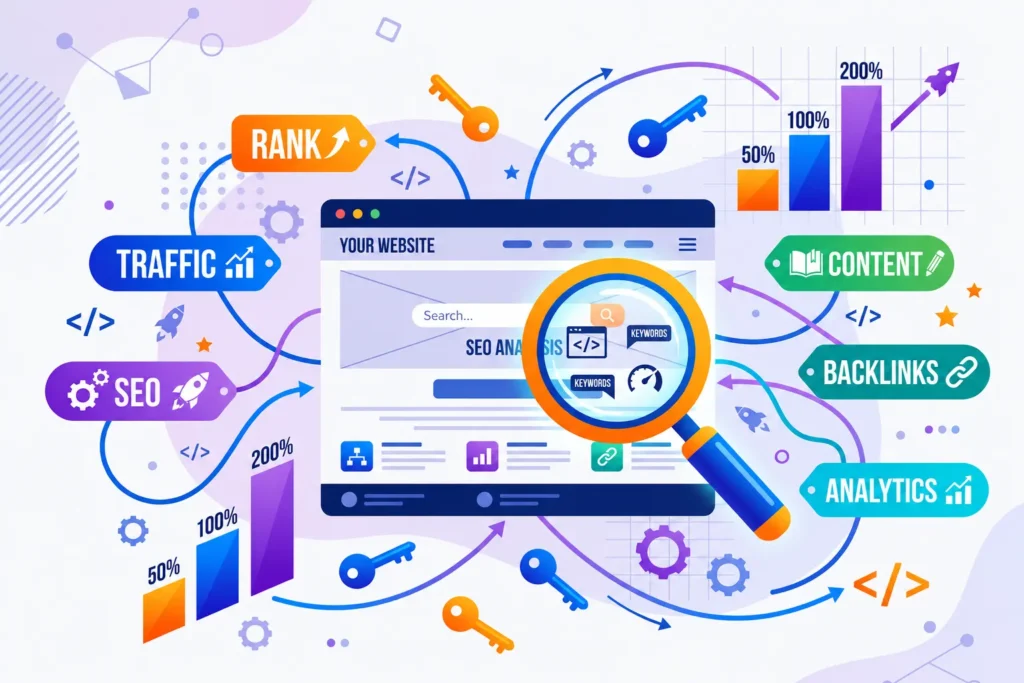
A website is one of the most important components of any business’s online presence in today’s digital world. Nevertheless, a website’s design alone is not sufficient; it must be optimized as well.
That’s where Search Engine Optimization (SEO) comes. The idea is to make sure that businesses are visible where customers search the most. Whether you are a startup, entrepreneur or a leading business brand, optimizing your website improves your brand’s visibility, site ranking, traffic and generates consistent leads without relying solely on advertising.
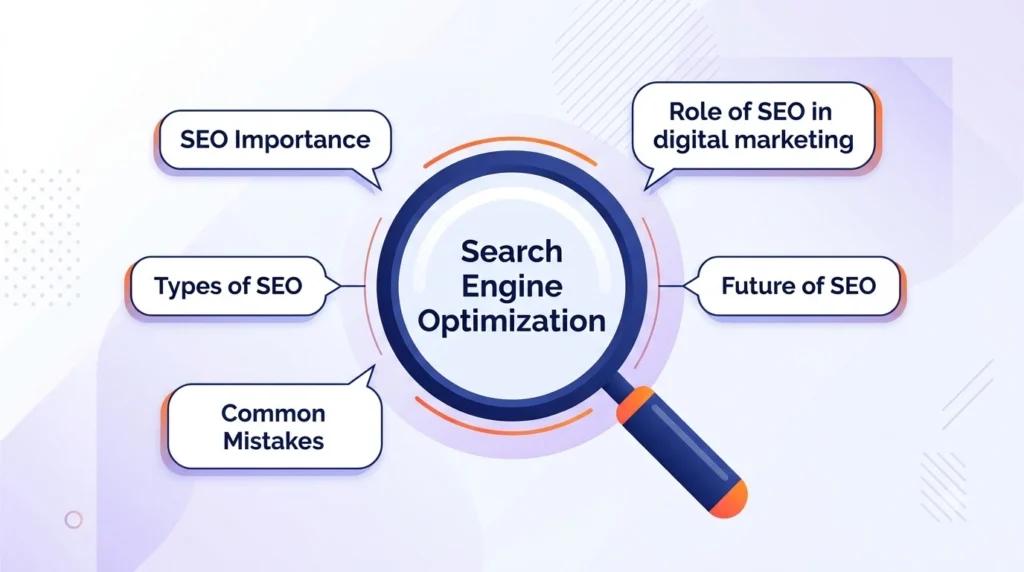
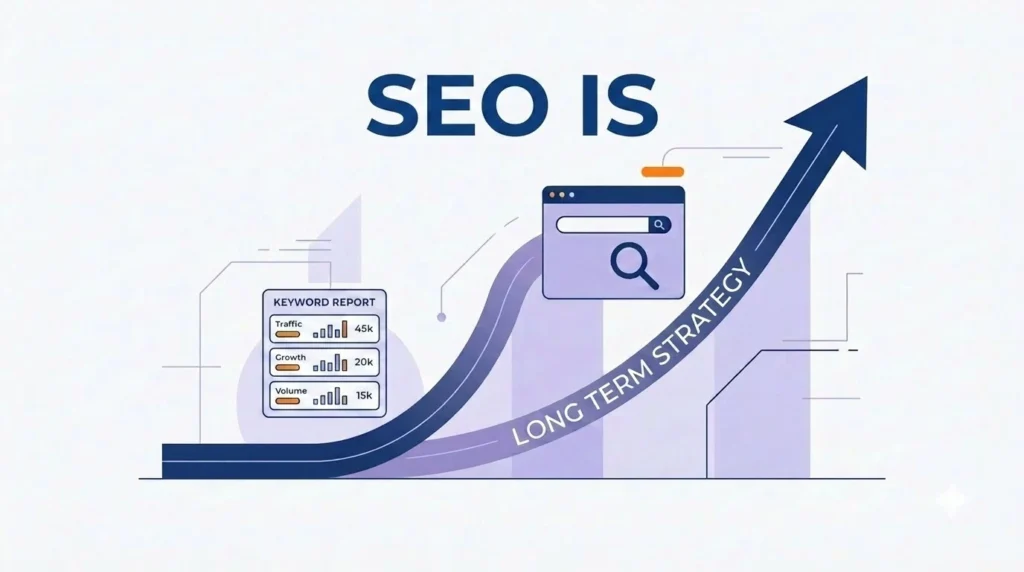
Investing in SEO is a long-term growth strategy because it helps the search engines to build credibility of your content such that it appears in the search results. This blog explains everything related to search engine optimization (SEO), role of SEO in digital marketing, its types, top tips, best tools for search engine optimization and what does the future of SEO in digital marketing look like.
What is Search Engine Optimization?
Search Engine Optimization or SEO is the process of increasing a website’s visibility on search engines such as Google, Yahoo, and Bing when keywords relevant to your business are searched. It ensures that the right content reaches the right audience, thus optimizing your website to rank higher on search engines.
A good long term SEO strategy helps search engines understand your content so that your visitors have an enjoyable experience.
How Does a Search Engine Work?
Before we dive into the strategies of search engine optimization, having a thorough understanding of how search engines work will be useful.
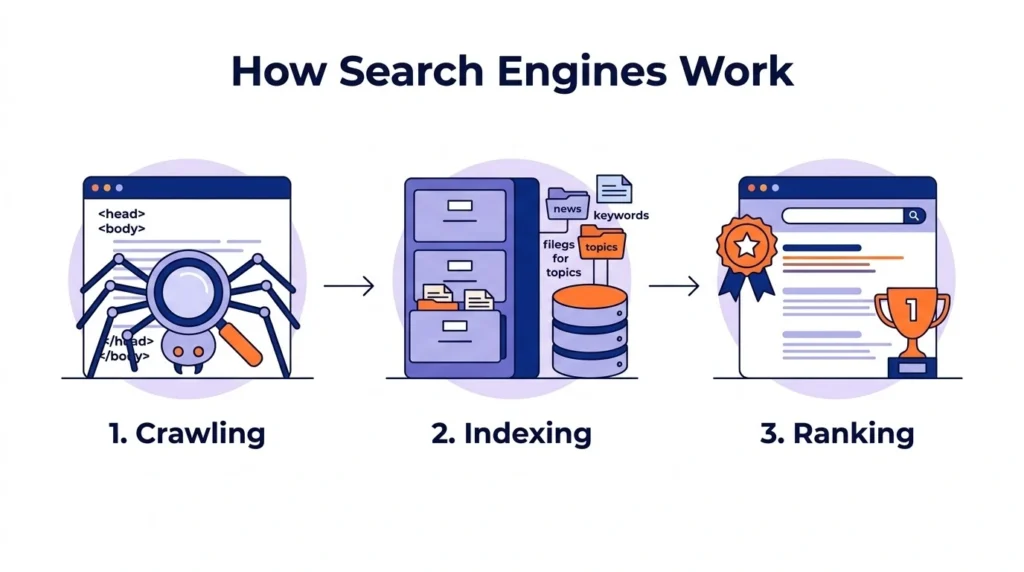
There are three main steps that search engines usually follow:
1. Crawling
Websites are discovered across the Internet by search engine bots following links.
2. Indexing
After discovering a page, it is the search engine’s duty to analyze the content of the page, then store it in a massive database called the index.
3. Ranking
As a searcher types a query into Google, hundreds of ranking signals are evaluated to determine which pages will provide the most relevant results.
Role of SEO in Digital Marketing
There can be no denying how significant the role of Search Engine Optimization (SEO) in digital marketing is in the current era. Using social media, email, and paid advertising can help you gain visibility, but SEO is the key to ensure long-term success online. SEO complements all the other digital marketing channels as it brings qualified traffic to websites. The better your website is optimized, the better the performance of paid campaigns will be as visitors end up on pages that are fast, informative and user-friendly.
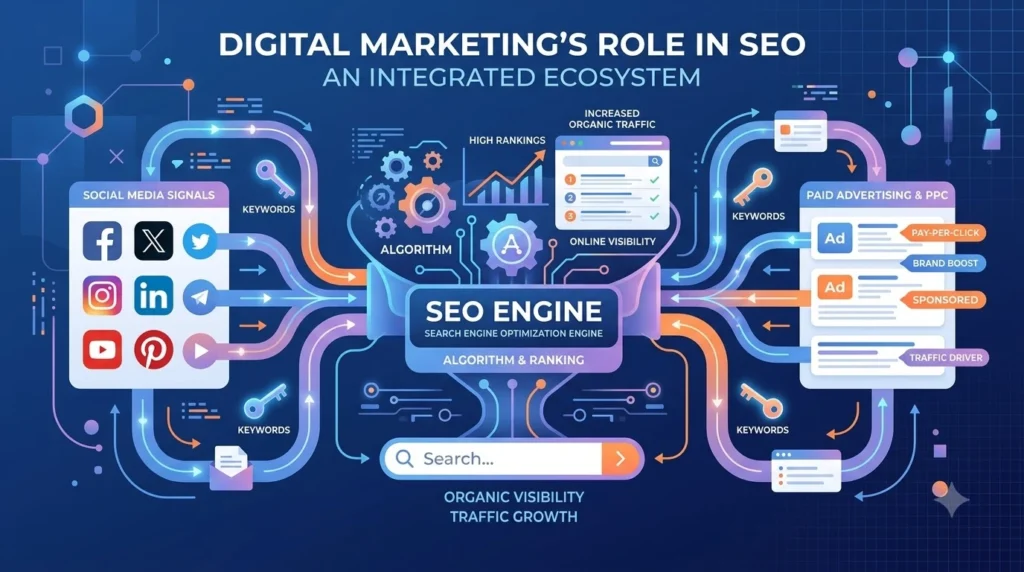
By managing a steady presence in organic search results, the role of SEO in digital marketing is to boost conversions, rank higher in search engines, and attract the right visitors to your website. Therefore, search engine optimization forms a well-integrated digital growth strategy when combined with digital marketing.
Types of SEO
People often associate Search Engine Optimization with only adding keywords in the content. In fact, there are types of SEO each of which concentrates on a specific facet so as to optimize the website.
1. On- Page SEO
On-page SEO refers to optimizing the elements within the website, including:
- Meta titles
- Meta descriptions
- Keyword optimization
- Headings
- Header tags
- URL structure
On page SEO is effective for performing Search Engine Optimization which gives both search engines and users a good understanding of your on page topic.
2. Off-Page SEO
Off-page SEO refers to activities that are performed externally to generate traffic on the website, this includes:
- Brand mentions
- Social media marketing
- Digital PR
- Earning backlinks from reputable websites
- Guest blogging
Backlinks are like recommendations from outside sources. If it is a trusted site that is promoting your site, then your content is considered credible by search engines for search engine optimization.
3. Technical SEO
Technical SEO ensures that search engines are able to crawl and index smoothly on your website to ensure better rankings.
Important factors are:
- Fast loading speed
- Mobile friendly and responsive
- Secure HTTPs connection
- Clean website layout
- Structured data
Without proper technical search engine optimization, irrespective of how brilliant the content is, it might struggle to rank.
4. Local SEO
Local SEO strategy involves optimizing a website to appear in search results based on a location, such as Google Maps. It is important to regularly update your business profile on Google, to collect reviews and ratings, and to optimize your Google business profile to boost your visibility.
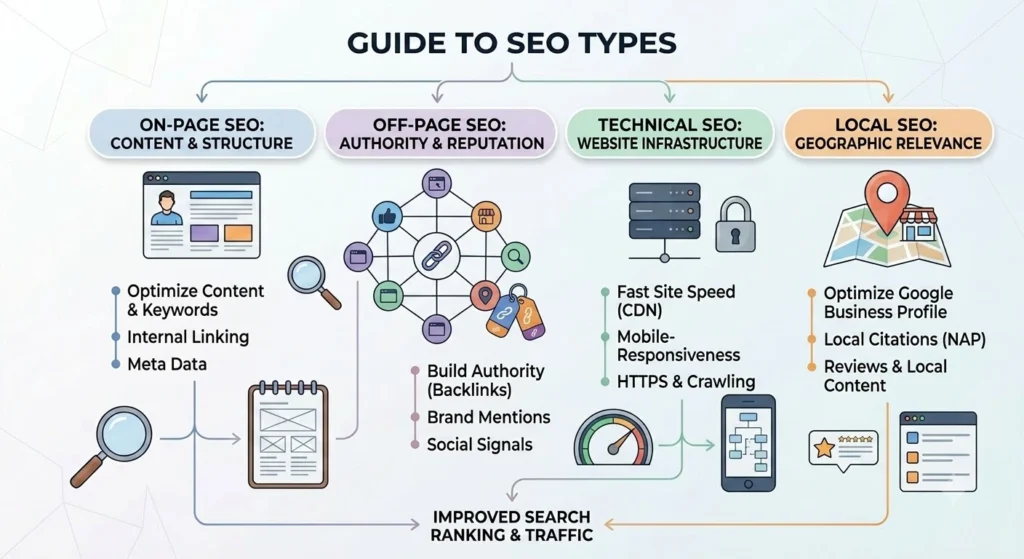
As long as each of these SEO techniques are conducted ethically, they all contribute in improving a site’s performance and visibility.
Top Tips For Performing SEO
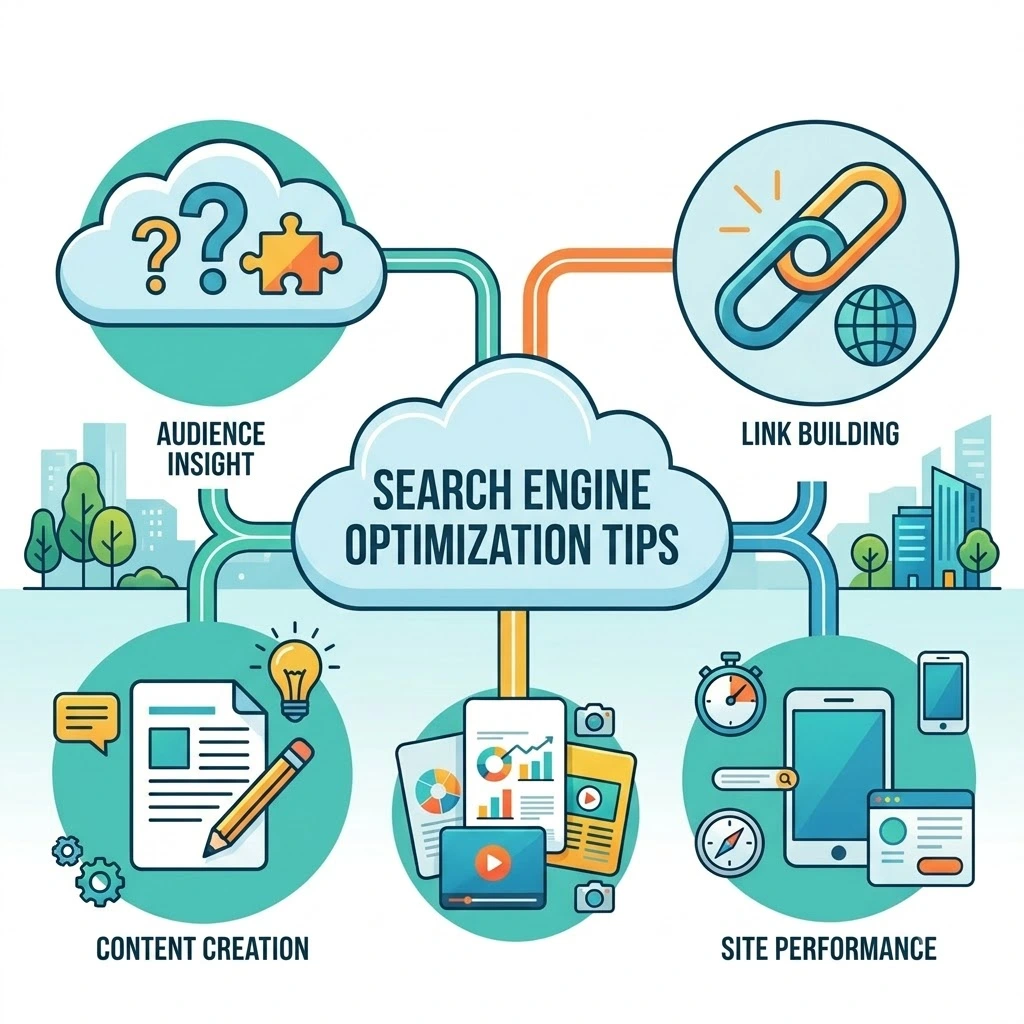
Search Engine Optimization, is a long term strategy that can be achieved by using some proven tips. It is not a one time talent show rather a continuous process that delivers results in 3- 4 months, if performed consistently. Here are a few top tips for performing SEO.
1. Start with questions and then pick keywords
The science behind writing ‘user friendly content’ is to think like a reader/ customer before drafting the content. Stop thinking about keywords first that can be used. Rather start thinking of real questions that people usually search related to your niche topic.
When users search on search engines they are either asking for recommendations, learning something or trying to solve something. For example: ‘Best Places to Eat North Indian in Delhi’ or ‘Top Tips for Performing SEO’, or ‘Best Tools for Search Engine Optimization’, these search words hold the real traffic in daily searches.
2. Consistent Content Matters
The most cliche line for any digital marketer to say is ‘publish consistently’. However, no matter how obvious it sounds, content consistency is crucial for SEO.
Google algorithm pushes blogs that’ve been consistent for 7-9 months over a perfect well drafted blog written once a year. The algorithm is patient, it gives results to those who are patient and consistent with it.
3. Treat Links Like Handshakes
When we say links, there are 2 types of link : External and Internal links. Yes, both these links when performing search engine optimization play a vital role in optimizing your website to rank #1.
Internal links are those links that help users to switch from one page to another of the same website. It helps in reducing the bounce rate too as the audience ends up browsing your website’s other pages.
While external links are outsider links where third parties refer to your content, thus providing credibility. A link from another site is basically a handshake that says “these people know their stuff.” You can’t buy a handshake. You have to earn it.
Thus, using both of these links in your blogs can help in improving search engine optimization results.
4. User Experience Counts
When someone visits your site, the kind of experience they have while interacting with it determines your impression of the business. Thus, a website should have a faster loading, must be mobile friendly, content should be original and honest. A slow site that takes forever to load is the loudest way to say “I don’t care about you,” which in turn affects the ranking of the website.
Best Tools for Search Engine Optimization
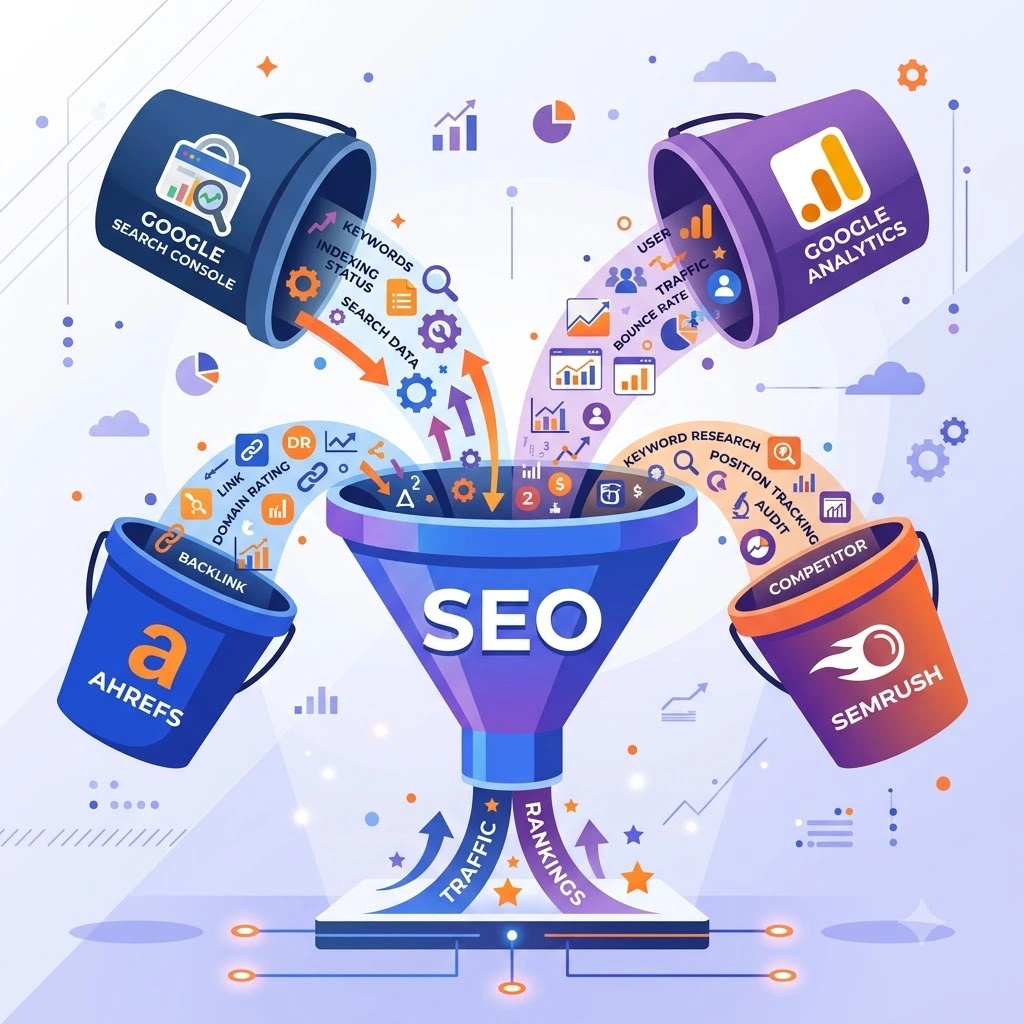
SEO is the amalgamation of various tools which are used together to optimize any website for best rankings. There are numerous tools available online to perform SEO, however best tools for search engine optimization are:
1. Google Search Console
This tool helps you measure your site traffic and tells you which of your pages are performing and where it requires fixing.
2. Google Analytics
Google analytics helps you analyze your website traffic by studying its audience and how they are interacting with your content. This tool also helps in measuring the bounce rate of the site.
3. Ahrefs
Ahrefs is one tool that you will find listed in every ‘Best tools for search engine optimization list’. It is one of the most widely used and most comprehensive SEO tools. It masters in backlinks, keyword research and competitor analysis.
4. Sembrush
All-in-one digital marketing tool and visibility platform for online marketing. Thousands of marketers, agencies and freelancers use it for search engine optimization, keyword research, market gap analysis, paid advertising, etc. In other words, Sembrush functions as a complete magic guide for digital marketers.
The Future of Search Engine Optimization
There is no doubt that the future of SEO is evolving rapidly, but people continue to rely on Google for their search needs, making search engine rankings significantly important. Furthermore, users are increasingly turning to AI platforms and voice assistants to find information. This generates the need to build strategies that integrate Answer Engine Optimization (AEO) and Generative Engine Optimization (GEO) with search engine optimization.
1. Answer Engine Optimization (AEO)
The way people browse is changing, instead of visiting multiple sites users demand direct answers through voice assistants and AI platforms. AEO focuses on creating content that directly answers queries using AI tools.
2. Generative Engine Optimization (GEO)
AI platforms like ChatGPT, Claude, Gemini etc have made research easy. Instead of giving a list of links to the users, these tools offer comprehensive information fetched from different sources. GEO focuses on optimizing content such that it is referred to by these AI tools
Conclusion
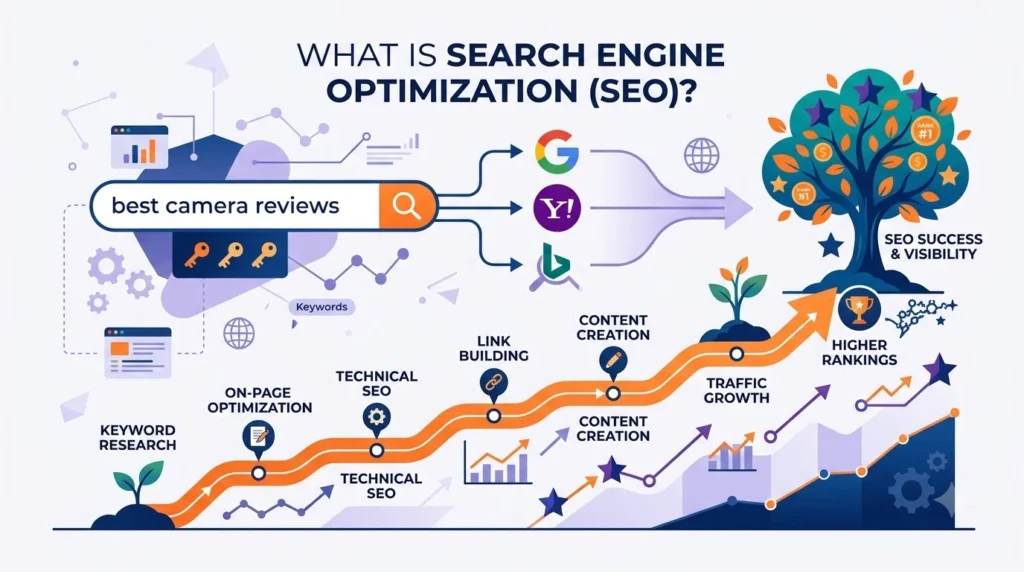
Optimizing your website for search engines remains the best strategy to promote your online presence. Increasing a business’s rankings, attracting qualified traffic, and leveraging SEO in digital marketing require a lot of knowledge, application, and leveraging.
Craft Arc Media believes SEO goes beyond rankings on Google. Our goal is to build brand authority through meaningful user experience. Investing in an effective search engine optimization strategy and creating valuable content can help your website succeed in the long term.
Frequently Asked Questions
Yes, by investing in SEO your business will be able to improve their online visibility, attract qualified traffic, establish credibility and grow without replying only on paid channels of promotion.
By using Google Keyword Planner, you can identify keywords that are relevant to your audience, analyze search volume, evaluate competition, and match the search intent of your audience.
SEO is a long and a continuous strategy. It usually takes 3 to 6 months for a website to begin showing noticeable improvements, depending on the competition, site authority, and the consistency of optimization.
Yes, SEO is an integral part of digital marketing. To carry out keyword research, analyze websites, and monitor performance, SEO tools such as Google Search Console, Google Analytics, Google Keyword Planner, Ahrefs, SEMrush, Moz, and Screaming Frog are commonly used.
Optimizing content for search engines is the primary focus of SEO, while AEO (Answer Engine Optimization) focuses on optimizing content for direct answers and voice search, whereas GEO emphasizes optimizing content to be referenced by artificial intelligence tools.